

A Premier B2B Part Search
AMPHENOL COMMERCIAL PRODUCTS L77TWA3W3SP2YRM84 Hybrid D-Sub Connector
Amphenol's Hybrid D’Sub series offers a unique solution for applications requiring a combination of different contact types within a single connector housing. This connector permits a mix of signal, power, shielded, high voltage, and fiber optic contacts, reducing cable clutter and simplifying system design. Compliant with MIL C24308, NFC93425, and HE507, the L77TWA3W3SP2YRM84 is ideal for industrial, medical, and telecom applications where space optimization is critical. It features steel-tin plated shells, high-temperature thermoplastic insulators, and gold-plated signal contacts for reliable performance and signal integrity.
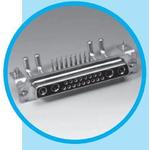
AMPHENOL COMMERCIAL PRODUCTS L77TWA3W3SP2YRM84 Hybrid D-Sub Connector Specifications:
- Materials: Shells: Steel-Tin plating; Insulators: High temperature black thermoplastic; Signal contacts (Female): Machined bronze; Signal contacts (Male): Machined brass, 15µ" Au over 79µ" Ni min. or 30µ" Au over 79µ" Ni min.; Shielded contacts (Female): Machined bronze; Shielded contacts (Male): Machined brass, Inner conductor 15µ" Au or 30µ" Au over 79µ" Ni; Outer ring Flash Au over 79µ" Ni; Terminations: Tinned, except solder cup and crimp terminations gold flash; Brackets: Steel-Tin plating; Front jackscrews: Brass-Tin plating; Rear clinch nuts: Brass-Tin plating; Boardlocks: Bronze-Tin plating; Stand-off: Brass-Tin plating
- Electrical Data: Signal contacts Current rating: 7.5 A with 10 A peak; Power contacts Current rating: 10-40 A (PCB, solder cup, crimp terminations); Shielded contacts Current rating: 0.5 A; Voltage rating: Signal and power contacts 300 V.R.M.S. at 50 Hz; Shielded contacts 150 V.R.M.S. at 50 Hz; Frequency range: 0-1 GHz; Attenuation: 0.2dB; V. S. W. R.: 1.4 (+0.04/GHz); Characteristic impedance: 50 Ohms; Dielectric withstanding voltage: ≥ 1000 V.R.M.S. at 50Hz; Insulation resistance: ≥ 5000 M Ohms at 500 VDC; Contact resistance: ≤ 5m Ohms; Shell resistance: ≤ 1m Ohm
- Mechanical Data: Contact retention force in dielectric material: > 40N; Maximum mating and unmating force: E size 70 N, A size 80 N, B size 100 N, C size 150 N, D size 180 N; Compatible with process: IR - Air convectioned 260˚ for 20 s; Resistance to solder iron heat: 260˚C for 30 s; Mating cycles: ≥ 200 (class ll) or 500 (class l)
Buy the L77TWA3W3SP2YRM84 AMPHENOL COMMERCIAL PRODUCTS Hybrid D-Sub Connector | myMectronic
Purchase the Amphenol L77TWA3W3SP2YRM84 Hybrid D-Sub Connector securely and efficiently online.
Buy Now
Frequently Asked Questions
Where can I buy AMPHENOL COMMERCIAL PRODUCTS L77TWA3W3SP2YRM84?
You can click on the BUY or RFQ button to purchase L77TWA3W3SP2YRM84 from an authorized AMPHENOL COMMERCIAL PRODUCTS distributor.
How do I troubleshoot issues or seek technical support for part L77TWA3W3SP2YRM84?
You can download the L77TWA3W3SP2YRM84 datasheet or visit the AMPHENOL COMMERCIAL PRODUCTS website for support.
Who is the manufacturer of L77TWA3W3SP2YRM84?
AMPHENOL COMMERCIAL PRODUCTS