

A Premier B2B Part Search
SAMTEC ERM8025050LDVTR High-Speed Board Connector
The Rugged High-Speed Header is a robust board-to-board connector designed for demanding industrial and high-speed data applications. Made with black LCP insulator and phosphor bronze terminals, it offers excellent durability and electrical performance, with a wide operating temperature range from -55°C to +125°C. It supports voltages up to 225 VAC / 318 VDC, and features RoHS compliance and lead-free solderability. Available in multiple positions per row, it ensures reliable connections for high-speed signals such as PCIe, GbE, and Power.org protocols, ideal for rugged industrial environments.
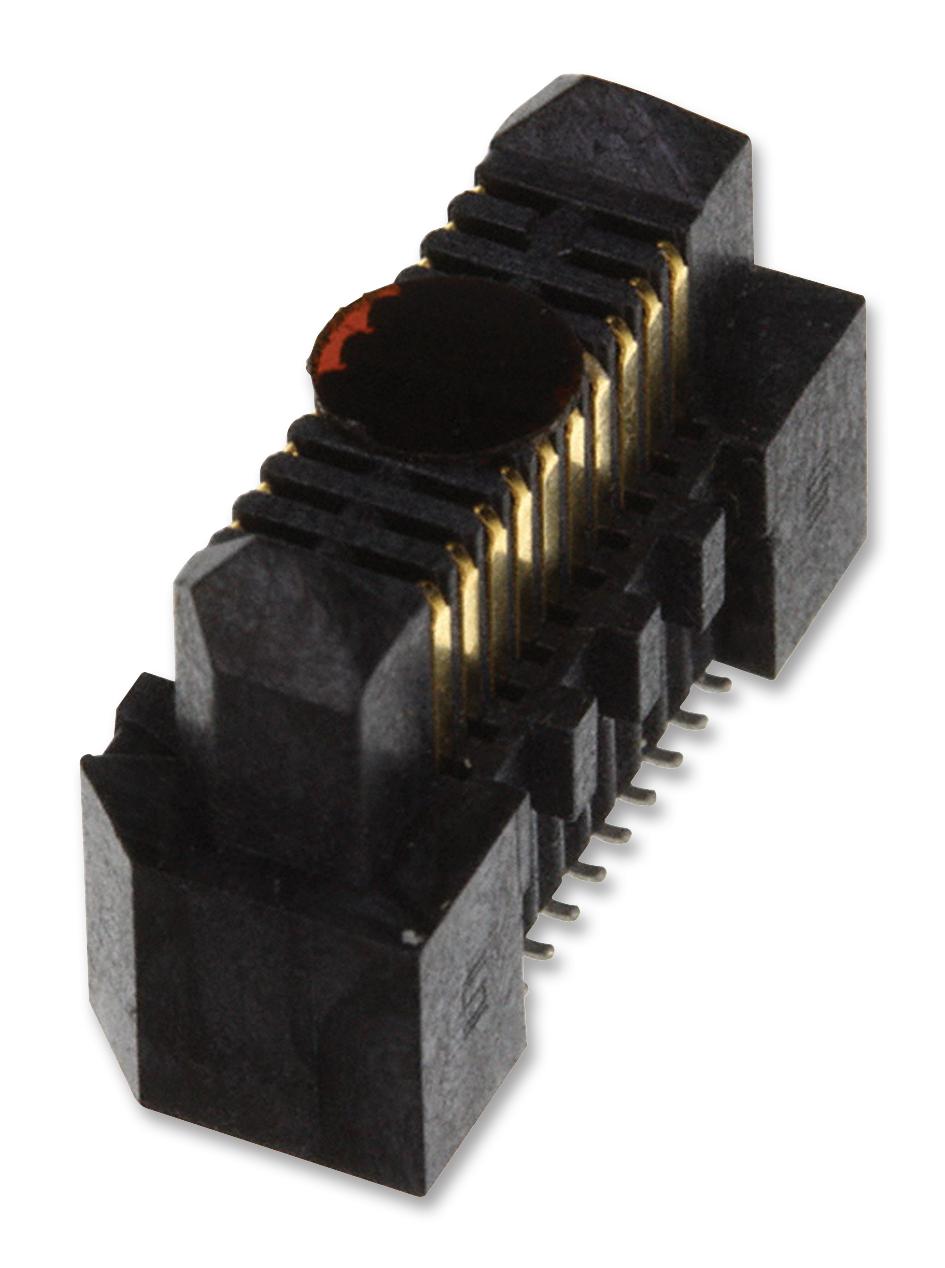
SAMTEC ERM8025050LDVTR High-Speed Board Connector Specifications:
- Insulator Material: Black LCP
- Terminal Material: Phosphor Bronze
- Operating Temp Range: -55 °C to +125 °C
- Voltage Rating: 225 VAC / 318 VDC
- RoHS Compliant: Yes
- Lead-Free Solderable: Yes
- Pin/Position Count: Multiple options, e.g., 5.0 mm, 7.0 mm pitch
- Contact Plating Options: Tin, Gold, others
- Supported Protocols: PCI Express, GbE, Power.org
- Terminal Material: Phosphor Bronze with Au or Sn coating
- Maximum current per row: Specific to model, typically high current support
- Compatibility: SMT Lead Coplanarity: 0.10 mm to 0.15 mm
- Certifications: Recognized by industry standards, RoHS compliant
Buy the Samtec Series ERM8 High-Speed Board Connector for Industrial Applications: ERM8025050LDVTR
Order the high-performance Rugged High-Speed Header from Samtec online today. Designed for demanding industrial environments, it offers excellent electrical performance, wide operating temperature range, and multiple configurations for various high-speed protocols such as PCIe, GbE, and Power. Made with durable materials like black LCP insulator and phosphor bronze terminals, it ensures reliable connections, RoHS compliance, and lead-free soldering options. Perfect for applications requiring robust, long-lasting connectivity in challenging conditions.
Get Samtec ERM8-013-05.0-S-DV-DS-L-TR today—built for precision, durability, and high-speed performance in rugged environments.
Frequently Asked Questions
Where can I buy SAMTEC ERM8025050LDVTR?
You can click on the BUY or RFQ button to purchase ERM8025050LDVTR from an authorized SAMTEC distributor.
How do I troubleshoot issues or seek technical support for part ERM8025050LDVTR?
You can download the ERM8025050LDVTR datasheet or visit the SAMTEC website for support.
Who is the manufacturer of ERM8025050LDVTR?
SAMTEC