

A Premier B2B Part Search
SAMTEC ESW13213GD Data Connector
The ESQ series connectors are high-quality, RoHS compliant components designed with black glass-filled polyester insulators and phosphor bronze contacts, plated with Au or Sn over a 50 µm layer. They feature a current rating of 5.2 A per pin for ESW/TSW models and 5.7 A for ESQ/TSW models, operating within -55°C to +125°C or +105°C depending on plating. These connectors accommodate insertion depths from 0.145" to 0.250" and are suitable for wave soldering, providing reliable connections in demanding electronic applications with high cycle durability and compliance standards.
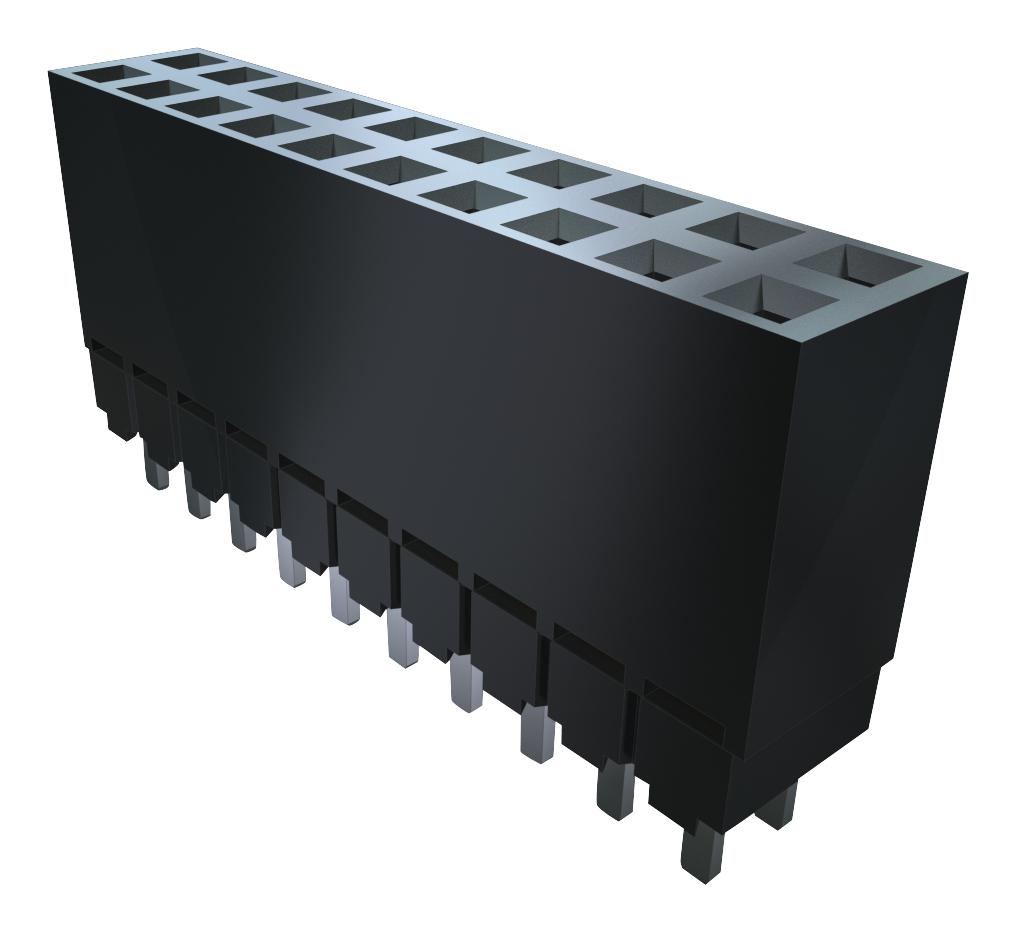
SAMTEC ESW13213GD Data Connector Specifications:
- Insulator Material: Black Glass Filled Polyester
- Contact Material: Phosphor Bronze
- Plating: Au or Sn over 50 µm
- Current Rating: 5.2 A per pin (ESW/TSW), 5.7 A per pin (ESQ/TSW)
- Voltage Rating: 30 VAC
- Operating Temp Range: -55°C to +125°C with Gold, -55°C to +105°C with Tin
- Insertion Depth: 0.145" to 0.250" (3.68 mm to 6.35 mm)
- Normal Force: 125 grams (4.4 N)
- Max Cycle: 100 cycles with 10 µm (0.25 µm) Au
- RoHS Compliant: Yes
- Lead-Free Solderable: Wave only
- Compatibility: PC/104™, non-stackthrough and stackthrough options available
Buy the Samtec Series ESQ Data Connector: ESQ-132-14-G-D
Purchase the Samtec Series ESQ data connector online today and ensure your electronic assembly benefits from high-quality, RoHS compliant components with gold or tin plating for increased durability. Designed for demanding applications, these connectors offer excellent current capacity, a wide temperature range, and reliable insertion and cycle life. Ideal for PC/104™ and other embedded computing systems, the ESQ series provides dependable electrical connections with compliant soldering options, making it the perfect choice for engineers seeking durability and consistent performance in complex technology projects.
Order your Samtec Series ESQ data connector today and give your project the reliable high-performance performance it deserves.
Frequently Asked Questions
Where can I buy SAMTEC ESW13213GD?
You can click on the BUY or RFQ button to purchase ESW13213GD from an authorized SAMTEC distributor.
How do I troubleshoot issues or seek technical support for part ESW13213GD?
You can download the ESW13213GD datasheet or visit the SAMTEC website for support.
Who is the manufacturer of ESW13213GD?
SAMTEC