

A Premier B2B Part Search
SAMTEC MEC112002FDA Edge Card Connector
The MEC1 series is a high-performance edge card connector designed for reliable digital signal transmission in industrial and electronic applications. Featuring a black LCP insulator and BeCu contacts plated with Sn or Au over Ni, these connectors operate within -55°C to +125°C and support up to 2.2 A per pin. With an insertion depth of approximately 84 mm and a RoHS compliance, they are suitable for high-frequency single-ended (5.5 GHz) and differential pair (6.5 GHz) signaling. The connectors are lead-free, SMT mountable, and compatible with optional locking clips for secure connections, ideal for modern PCB designs.
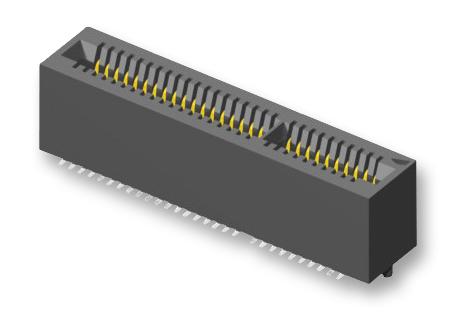
SAMTEC MEC112002FDA Edge Card Connector Specifications:
- Insulator Material: Black LCP
- Contact Material: BeCu
- Plating: Sn or Au over 50µm Ni
- Operating Temp Range: -55°C to +125°C
- Current Rating: 2.2 A per pin
- Voltage Rating: 300 VAC
- Insertion Depth: approximately 84 mm (0.330 inches)
- RoHS Compliant: Yes
- Processing: Lead-Free Solderable
- SMT Lead Coplanarity: Max 0.10 mm (0.004 inches)
- Signal Frequency: Single-ended 5.5 GHz, Differential 6.5 GHz
- Optional Features: Locking clip, alignment pin
- Contact Positions: Varies with size, e.g., 60 to 70 positions shown
- RoHS and certification compliant, suitable for high-speed digital and RF applications
Buy the Samtec MEC1 – Reliable Edge Card Connector for Industrial Applications
Purchase the Samtec MEC1 edge card connector online today to ensure reliable high-speed data transmission and secure connections in your electronic projects. These connectors feature a durable black LCP insulator, high-quality BeCu contacts with gold or tin plating, and are RoHS compliant. Suitable for high-frequency RF and digital signals up to 6.5 GHz, they are ideal for industrial, aerospace, and communication equipment. Easy to install with optional locking clips and alignment pins, these connectors guarantee long-lasting performance and versatile compatibility for your PCB designs.
Get Samtec MEC1 today—designed for high-speed digital signals and durable PCB connections.
Frequently Asked Questions
Where can I buy SAMTEC MEC112002FDA?
You can click on the BUY or RFQ button to purchase MEC112002FDA from an authorized SAMTEC distributor.
How do I troubleshoot issues or seek technical support for part MEC112002FDA?
You can download the MEC112002FDA datasheet or visit the SAMTEC website for support.
Who is the manufacturer of MEC112002FDA?
SAMTEC